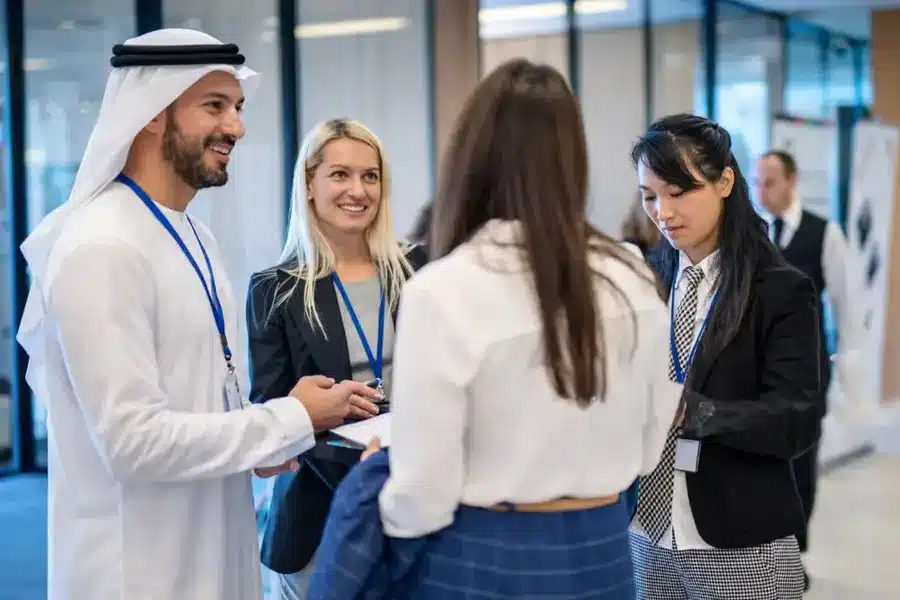
Strong business cities are built on meetings that happen outside formal boardrooms, and networking events in Dubai professionals follow closely are a good example of that pattern. Dubai’s event calendar increasingly mixes finance, technology, arts, and community activity in ways that create practical opportunities for founders, investors, advisers, and creative operators. The result is a city where networking is no longer limited to a conference badge or a private introduction. It is embedded in the rhythm of the district itself.
Why event ecosystems matter more than single conferences
DIFC’s official event pages show a useful mix of formats. Some events are business-led, such as the Dubai FinTech Summit and the Dubai AI & Web3 Festival. Others, such as DIFC Art Nights and the Sculpture Park programme, build softer forms of community engagement around culture and place. That combination matters because commercial trust rarely grows from one meeting alone. It grows from repeated encounters across different settings.
This makes Dubai’s event environment more valuable than a simple count of conferences would suggest. When a district hosts sector gatherings, public-facing cultural programmes, and recurring lifestyle activity, it creates denser opportunities for connection. A founder can meet a client at a formal summit, continue the relationship over coffee in the same district, and return later for a community event where conversation is easier and less transactional.
DIFC’s broader What’s On platform reinforces that model by connecting events, news, and district activity in one place. The district is presented not only as a financial centre but as a lifestyle and business destination. That matters because the most effective networks often form where professional and social life overlap in credible, well-used urban spaces.
What makes a networking event genuinely useful
The most useful events do not simply gather large audiences. They create relevant collisions between the right people. In practice, that means three features matter most:
- Sector relevance attracts people with compatible commercial interests.
- Repeat presence makes follow-up more likely than a single isolated encounter.
- District quality encourages meetings before and after the event itself.
That is why events in Dubai vary so much in value. A high-profile summit can be useful, but so can a curated district programme that attracts a narrower group with deeper overlap. DIFC’s own event list shows both ends of that spectrum, from global technology and fintech gatherings to art-led programmes designed to connect community audiences.
For professionals deciding where to spend limited event time, that distinction matters. A district with recurring, curated programming usually produces better follow-up than a calendar made up of disconnected one-off gatherings. It gives attendees more reasons to return, more familiar meeting points, and a clearer sense of who is likely to be in the room.
It also creates a more practical entry point for newcomers. Someone attending a sector summit for the first time is more likely to build confidence in a district that already offers obvious places to meet again, eat, and continue conversations after the official sessions end.
Why Dubai benefits from mixed business and culture programming
A purely commercial event calendar can become repetitive. A mixed calendar does something different. It broadens the pool of people entering the district while giving professionals more than one way to build relationships. Art nights, public installations, and innovation festivals all generate different kinds of audiences, but they also increase footfall, visibility, and familiarity.
That broader urban effect supports business outcomes indirectly. Districts become easier to navigate, more memorable to visitors, and more attractive for repeat meetings. Over time, that helps turn a place from a business address into a networking environment.
Conclusion
Dubai’s networking strength comes from concentration, not only scale. The most productive events are the ones embedded in active districts where professional meetings can continue naturally before and after the official programme. That is why curated event hubs such as DIFC matter more than a long generic city calendar.
