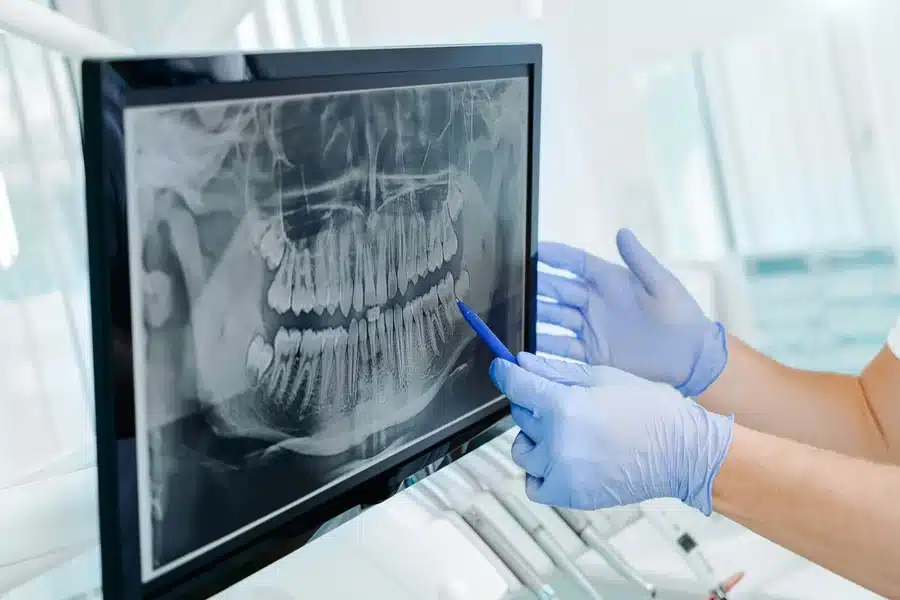
X rays in dental care can feel scary. The word alone can stir worry about safety, pain, or cost. Yet you deserve clear facts. X rays help your dentist see what eyes cannot. Small cavities. Bone loss. Infection. Hidden teeth. Early problems often stay silent. You might feel fine while damage grows. X rays give a simple picture that guides smart treatment. They also help avoid guesswork and repeat visits. Routine care is more effective after treatment. A dentist in Asheville may use different types of X rays for different needs. Some focus on one tooth. Others show your whole mouth. Each type has a clear purpose. Modern dental X rays use very low radiation. The risk is small. The benefit is real. When you understand why X rays matter, you can ask better questions and protect your health with more confidence.
Why your dentist uses X rays
You see your teeth in the mirror. Your dentist sees much more. Yet even careful eyes cannot see inside teeth or under the gums. X rays fill that gap. They show problems early. They also confirm when tissue is healthy.
Your dentist may use X rays to:
- Find cavities between teeth
- Check bone support around teeth
- Watch tooth roots and nerves
- Plan fillings, crowns, or root canals
- Track growth in children and teens
- Look for infection, cysts, or tumors
Without X rays, many of these problems stay hidden. That can lead to sudden pain, broken teeth, or tooth loss.
Common types of dental X rays
You may notice that some X rays use a small sensor inside your mouth. Others use a machine that circles your head. Each type shows a different part of your mouth.
| Type of X ray | What it shows | When it helps you most
|
|---|---|---|
| Bitewing | Upper and lower teeth together on one side | Finds cavities between teeth and checks bone height |
| Periapical | Whole tooth from crown to root tip | Checks root infection, abscess, or deep cracks |
| Panoramic | All teeth, jaws, and sinuses in one image | Shows wisdom teeth, jaw problems, and growth patterns |
| Full mouth series | Set of bitewing and periapical images | Gives a complete view for new patients or major treatment |
This range of X rays lets your dentist match the image to your concern. That keeps your exposure low and your care targeted.
How often you may need X rays
There is no single schedule for every person. Your dentist looks at your risk for tooth decay and gum disease. Your age and health history also shape the plan.
As a general guide:
- Children may need X-rays more often. Their teeth and jaws change fast. Early decay can spread quickly.
- Teens often need X-rays to check wisdom teeth and crowding.
- Adults with low risk may need bitewings every one to two years.
- Adults with many fillings, dry mouth, or gum disease may need them more often.
Federal health experts explain that X-rays should be based on need, not habit.
Radiation risk and safety steps
Radiation is a real concern. You should not ignore it. Yet context matters. Modern digital dental X-rays use very low doses. The amount is often lower than what you get from daily life.
Your dental team uses safety rules that include:
- Digital sensors that need less radiation than film
- Lead aprons and thyroid collars when helpful
- Only taking X-rays when they change your care
The American Dental Association and the Food and Drug Administration give joint advice on safe use of dental X-rays.
Questions to ask your dentist
You have the right to understand each X-ray. A short talk can ease worry and prevent regret. You can ask three core questions.
- Why do I need this X-ray today
- What will you look for in this image
- How will the result change my treatment
You can also ask if older images still answer the same question. Your dentist can then explain any change in your risk or your mouth.
How X-rays protect your long-term health
Dental problems spread. A small hidden cavity can reach the nerve. An untreated infection can affect your jaw or other body systems. Early treatment usually costs less and hurts less.
X-rays support three main goals.
- They catch decay before you feel it.
- They track gum and bone loss so you can slow it.
- They guide safe plans for surgery, implants, or braces.
When you accept needed X-rays and question extra ones, you take control. You cut unseen risk without ignoring real danger. That balance protects you and your family.
