We flew out of Novosibirsk on a Sunday in early December, four of us, and the fare came to 84,000 rubles return, which was about a third of what the same routing cost in July. I had booked it in September, mostly on a hunch that nobody voluntarily flies north when the sun stops coming up, and the hunch paid off.
That is the whole trick with the polar night, and it is the opposite of what most people assume. Everyone talks about the aurora as a reason to go, which is fine, but the reason to go in the dark is that the dark is cheap.
What the polar night actually is, because the brochures fudge it
Above the Arctic Circle, somewhere between late November and mid-January, the sun does not clear the horizon at all. In Tromsø that runs roughly 27 November to 15 January. In Murmansk it is longer, closer to six weeks. In Longyearbyen, at 78 degrees north, you get four months of it and a sign at the edge of town warning about polar bears.
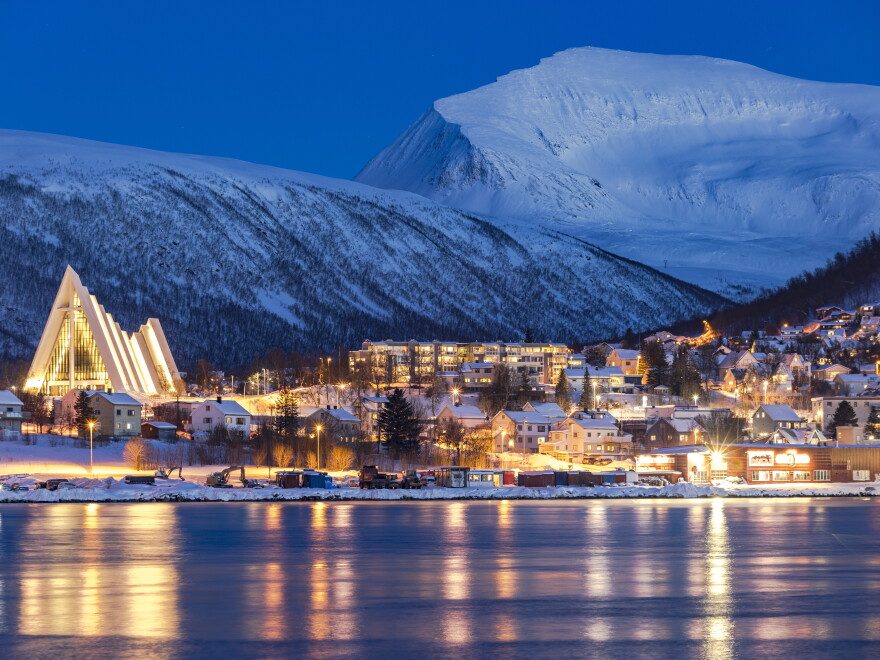
What surprised me is that it is not black. Around eleven in the morning there is a two-hour smear of blue and orange along the southern horizon, bright enough to read a newspaper by, and then it goes. My six-year-old called it "the sky doing a sunset and then changing its mind", which is about as good a description as I have read.
Booking it without paying aurora-season prices
The mistake I made the first time, in 2019, was flying into a hub and connecting. Two connections with a six-year-old and an eleven-year-old, in December, in a place where a delay means a night in an airport hotel, is not worth the forty quid you save.
- Check whether the airport has a direct flight from your side of the country, even if it costs more
- Work out the total door-to-door time, not the flight time
- Look at the connection airport's snow record, because a hub that closes in snow is a hub that strands you
- Price the airport hotel into the cheap option before you call it cheap
The other thing I would say, and it goes against a lot of the advice online, is that the cheapest days to fly out of Novosibirsk type of search only helps you so much on these routes. There are maybe two flights a week to most polar destinations in winter, so you are not choosing between Tuesday and Saturday. You are choosing between December and March.
Accommodation is where the money goes. A two-bedroom apartment in Tromsø in the first week of January ran us 2,100 kroner a night, roughly £155, and that was with a kitchen so we were not eating out three times a day. Hotels wanted double that for a family room and the breakfast was the only thing included. The kitchen is not a saving, it is the difference between going and not going.
The thing nobody tells you about the cold
It is not the temperature. Tromsø sits around minus four in January, which is milder than a bad week in Chicago. It is the ice underfoot. Pavement in a northern town in winter is a skating rink with a thin dusting of gravel, and an eleven-year-old carrying a phone and looking at a phone goes down hard. Studded overshoes, the pull-on kind with spikes, cost about 300 kroner a pair and were the single best purchase of the trip.
Daylight excursions mostly run in that blue window, which means everybody books the same three hours. We did a husky run at 10am and a snowmobile thing at 1pm and honestly the huskies were better, mostly because the kids could drive their own sled.
For the aurora, you need clear sky and you need to be away from town lights, and that means a tour, and a tour means about 1,200 kroner each. Two of our four nights were clouded out. Nobody refunds you for clouds, and the operators are clear about that when you book, so read the cancellation policy before you pay rather than after.
The alternative to all of this, for anyone in northern Europe, is the overnight train from Stockholm to Narvik, which is slower, warmer, and drops you inside the circle without a single airport. If you have the days to spare it beats flying, and I would say that plainly even though it costs me nothing to say it.
What decides it, in the end, is not the price and not the aurora forecast. It is whether your children can handle four hours of darkness in the middle of the day without asking you, every twenty minutes, when it gets light again.
