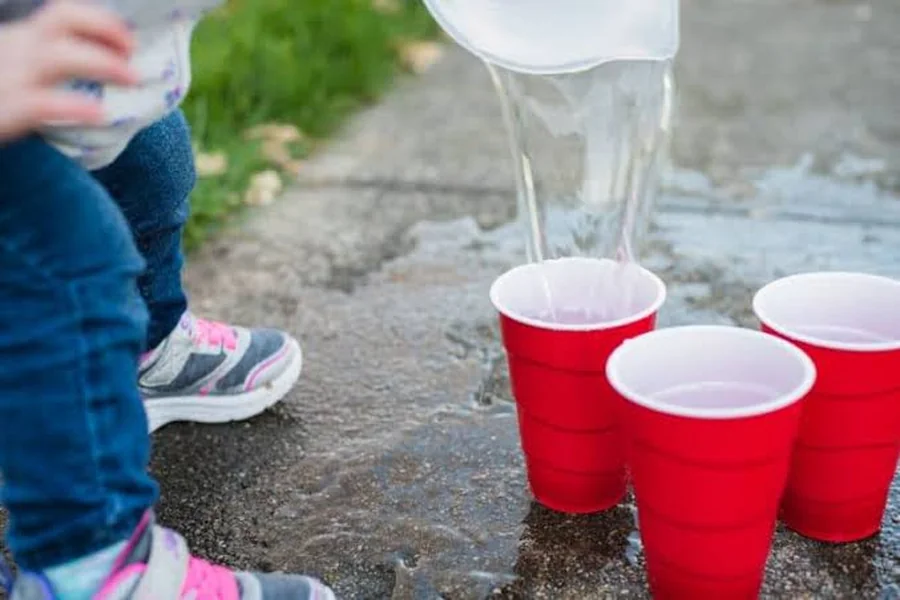
The wet counter, the puddle on the floor, the third refill of the pitcher in ten minutes. To an adult in a hurry, a three-year-old learning to pour looks like a small, tolerable waste of time and water. To the child’s brain, it’s one of the densest cognitive workouts of the day. Programs at authentic Montessori schools treat pouring, sweeping, and buttoning as serious curriculum rather than filler precisely because the task’s plain appearance hides the skills it builds.
Two views of the same activity sit in tension throughout early childhood. One sees chores. The other sees the scaffolding for reading, math, and self-control. Both deserve a close look.
The Adult Sees a Chore; the Brain Sees a Sequence
Pouring water from one small jug into another is, mechanically, a chore. In the child’s head, it’s a multi-step plan they have to hold together the whole way through: lift, tilt, watch the level, stop before it spills, set down, wipe up. That kind of held-in-mind sequencing is a working-memory task, and working memory is one of the three core capacities that cognitive scientists group under executive function, along with mental flexibility and self-control.
Children aren’t born with those skills. They build them by doing exactly this sort of small, deliberate work. An adult finishing the same task quickly is running the same circuitry on autopilot. A three-year-old, by contrast, is wiring it.
One View Counts the Spills; the Other Counts the Corrections
Watch a child pour and you’ll see two very different scorecards in play. The impatient one tallies spills, drips, and cleanup time. The other tallies self-corrections: the slower tilt on the second try, the hand that steadies the pitcher, the pause before the water reaches the rim. Those corrections are inhibitory control in action, the child overriding the impulse to keep tipping because a plan says stop.
This is why teachers resist stepping in. Every rescued spill is a correction the child didn’t get to make. The same goes for the fine motor coordination that pouring, scooping, and transferring build. It develops through repetition the child does, not the adult.
Speed Wins the Morning; Repetition Wins the Year
A parent doing the pouring is faster today. A child doing the pouring is faster in six months at everything that shares the same underlying skills, whether that’s following a recipe, lining up a column of numbers, or sitting through a story without interrupting. The trade-off looks lopsided in the moment and reverses over time.
- Longer attention spans. A child allowed to repeat a pouring exercise twenty times in a row is practicing sustained focus, not wasting water.
- Cleaner transitions. Drying the tray and returning the pitcher trains the closing half of a plan, the part most kids skip when adults take over.
- Calmer frustration. Spills the child cleans up teach a small, survivable version of things going wrong, which is where emotional self-regulation gets its reps.
- Real independence. The child who can pour their own water can also pour a sibling’s, and starts to see themselves as someone who contributes rather than someone who is served.
Each View Has Its Moment
Neither view is wrong all the time. On a rushed weekday morning with a bus to catch, the adult who pours the milk and moves the family out the door is making the right call. On a slower morning, or in a classroom built around a long uninterrupted work period, the child who pours their own, slowly and imperfectly and again, is doing the more important thing.
The mistake is letting the rushed view run every day. Practical-life activities look modest because they are, and that modesty is what makes them the right size for a three-year-old to actually finish.
The cognitive work underneath, the planning and the inhibition and the self-correction, is anything but small.
